
Hive inspection field notes
From opening up to deciding what to do next. Start with the sequence, then read the guide for the observation you need to understand.
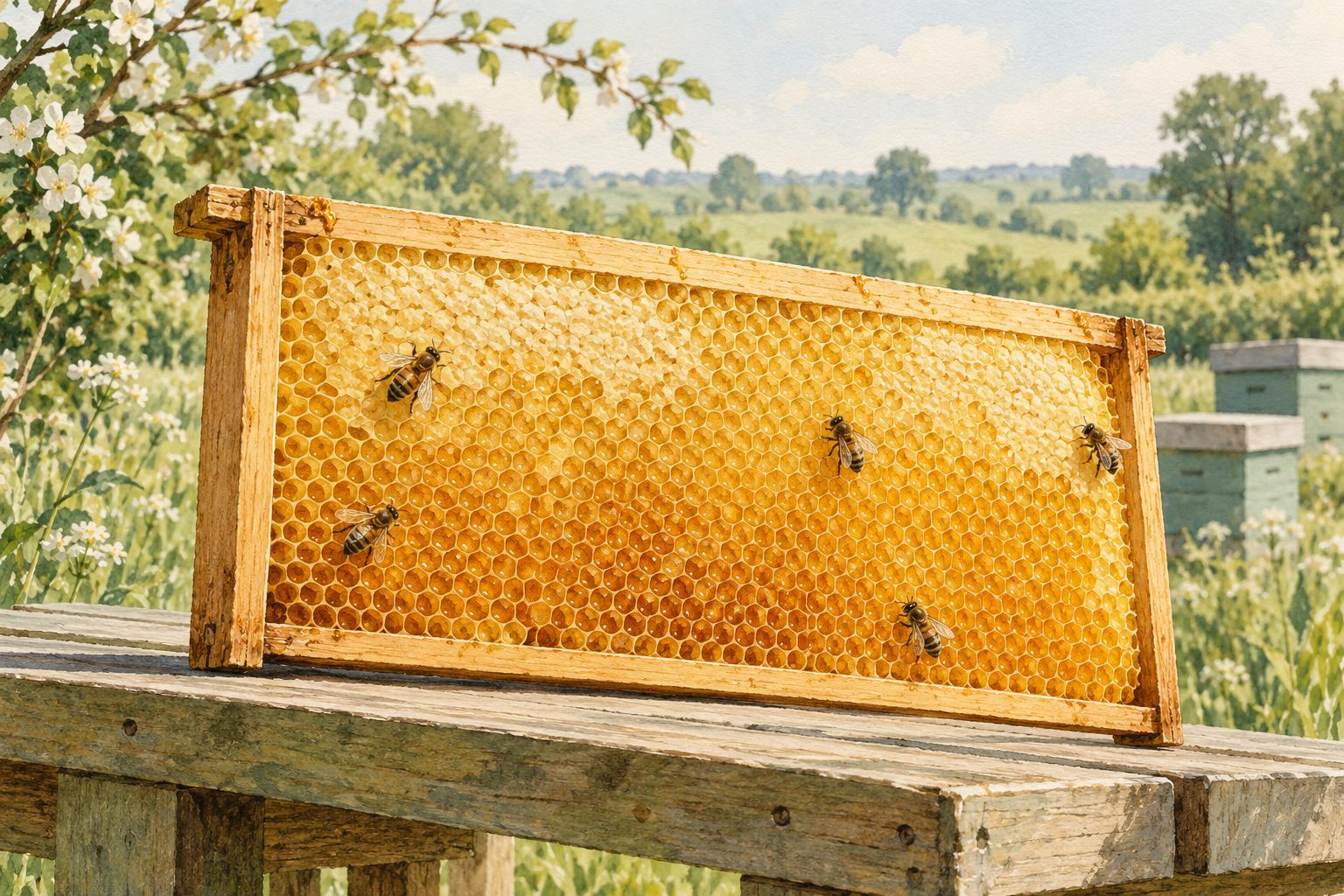
Keeping bees on an allotment or smallholding
Plan for neighbours, access and local permission before placing a hive; check the site’s own rules.
Read the field notes →02Spotting brood disease: when to call your bee inspector
Recognise concern, avoid diagnosis from photographs and use the official foulbrood reporting route.
Read the field notes →03Calm inspections: weather, time of day and handling
Choose conditions that allow a careful inspection and use gentle, deliberate handling.
Read the field notes →04Hive inspection checklist (printable)
A simple field sequence for recording stores, space, brood, queen cells and concerns.
Read the field notes →05How to do a hive inspection, step by step
A calm, repeatable sequence for opening a colony, checking its condition and closing it with clear notes.
Read the field notes →06Queen cells: swarm cells, supersedure and what to do next
Queen cells can have different contexts; record what you see and seek timely, experienced advice.
Read the field notes →07Varroa checks during inspections (monitoring, not treatment)
Understand why monitoring matters and follow NBU methods; this guide does not recommend treatments or doses.
Read the field notes →08What to look for: eggs, brood, stores and space
A practical observation list for colony condition, without trying to diagnose disease from one sign.
Read the field notes →09Winter checks without opening the hive
Use external checks for disturbance and security; seek experienced help before opening in winter.
Read the field notes →